

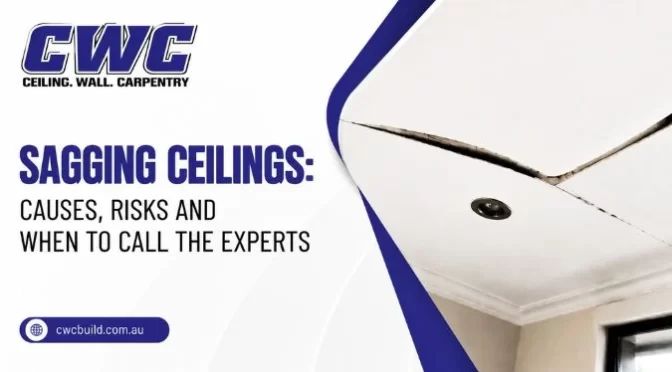
You might have noticed something unsettling: a gentle dip in your ceiling or perhaps hairline cracks appearing along the cornice. Understanding sagging suspended ceilings can help you identify the early warning signs and take timely action before the issue worsens. Sagging ceilings are not just cosmetic annoyances. They are warning signals that your home needs urgent attention. If you are experiencing ceiling sag, suspended ceiling repair in Perth from Ceiling Wall Carpentry (CWC) might be a great choice. Our repair solution is not a luxury; it is an important maintenance that could prevent catastrophic failure and protect your family’s safety.
Understanding What Causes Sagging Ceilings
Sagging does not happen overnight. We believe that there are multiple factors that contribute to ceiling degradation, and understanding these can help you recognise issues early.
Age and Material Degradation
Older homes with traditional suspended plaster ceiling systems experience material fatigue. The adhesives binding plaster to support structures slowly weaken, particularly under Perth’s intense sun. Roofspace temperatures can exceed 60 C, cooking these bonding agents until they fail. Plasterboard systems follow similar patterns: the glue separates from sheets, and fasteners lose holding power as surrounding materials degrade.
Water Damage and Moisture
Roof leaks transform water damage into structural compromise. Water-saturated insulation becomes incredibly heavy, adding crushing weight to ceiling systems. A single square metre of wet insulation can add 50 kg of pressure. This excess load exceeds what ageing support structures can bear, causing progressive sagging. Mould growth compounds the issues, weakening remaining structural components.
Structural Movement
Perth’s variable soil conditions cause subtle but persistent building movement. Temperature fluctuations expand and contract framing members. This constant shifting stresses ceiling fixings, eventually causing them to fail. A suspended plasterboard ceiling that’s worked perfectly for 20 years suddenly begins separating from walls and developing stress cracks.
Recognising Structural Concerns
Sagging indicates structural failure, not mere aesthetic decline. When you see visible sag, the underlying support system is already compromised. Several warning signs demand immediate professional assessment:
- Visible Sagging or Dipping: Any noticeable downward curve indicates load-bearing failure. This isn’t cosmetic damage; it’s your ceiling losing strength.
- Cracks and Separation: Cracks at ceiling-wall junctions mean materials are moving. Stress cracks radiating from corners signal concentrated load pressure. Gaps between ceiling and cornices mean structural members are shifting.
- Screw Pops: Fasteners pushing through plaster suspended ceiling materials indicate the adhesive has failed. Where you see one screw pop, many more exist, and they’re all that’s holding weight.
- Pronounced V-Shapes: Where plasterboard sheets meet, a V-shaped dip means the joint is failing. This represents a specific weakness in your ceiling system that will progressively worsen.
These signs mean your ceiling requires professional inspection from our suspended ceiling specialists immediately. Don’t delay; if you think problems stabilise on their own; they won’t.
Safety Risks That Demand Action
Sagging ceilings represent genuine danger. This isn’t alarmism; it’s structural reality.
- Collapse Risk: Sagging always progresses to collapse if left unaddressed. Complete ceiling failure dumps materials, potentially 100kg or more, onto whoever happens to be below. Plasterboard, insulation, and framework create falling debris hazards that can cause serious injury or death.
- Insurance Gaps: Most home insurance excludes ceiling collapse from normal coverage. Collapse caused by age, neglect, or deferred maintenance typically isn’t covered. You’ll bear the complete financial burden of damage, replacement, and injury claims.
- Cascading Damage: Collapsed ceilings damage everything beneath, such as furniture, electronics, flooring, walls, and people. Secondary damage claims often exceed the original repair cost.
When to Contact Suspended Ceiling Contractors?
Recognising the need for professional help is crucial. Suspended ceiling contractors possess expertise that DIY assessments cannot replace. You should contact professionals if you notice:
- Any visible sagging, no matter how slight
- Cracks appearing on ceilings or walls
- Soft spots or areas of ceiling flexing under finger pressure
- Water stains or discolouration
- Cornice separation from walls
- Screw pops or nail pops
- Unexplained sounds from the roof cavity
We can assess structural integrity, identify root causes, and recommend appropriate repairs. They understand building codes, have access to proper repair materials, and carry insurance protecting you during work.
Protect Your Home With Expert Ceiling Wall Carpentry (CWC) Solutions
Don’t wait for disaster. Sagging ceilings escalate from manageable maintenance into catastrophic failures. Ceiling Wall Carpentry (CWC) specialises in diagnosing and repairing plasterboard suspended ceiling systems before collapse becomes inevitable.
We provide obligation-free inspections, transparent assessments, and expert repairs backed by workmanship warranties. Our team recognises sagging ceiling causes early, implements lasting solutions, and protects your family’s safety. Whether you need assessment, repair, or complete ceiling restoration, we deliver professional expertise with Perth-wide service.
Contact our team today at 0404541531 or send us an email at cwcbuild@gmail.com for your free inspection. Don’t let a sagging ceiling become tomorrow’s structural emergency.
FAQs
How quickly do sagging ceilings typically progress from first appearance to failure?
Progression varies significantly; some ceilings sag for years before worsening, others deteriorate rapidly depending on damage severity and ongoing stress factors.
Can I paint or patch a sagging ceiling to extend its lifespan temporarily?
Surface fixes mask problems but don’t address underlying structural failure. The ceiling continues degrading invisibly beneath cosmetic repairs regardless.
What’s the difference between minor cosmetic ceiling sag and serious structural failure?
Minor sag might involve less than 10mm deflection with no visible stress cracks. Serious failure shows visible cracks, cornice separation, and progressive worsening.
If my ceiling sags in one room, does that indicate problems elsewhere in the house?
Not necessarily. Localised sagging suggests specific issues: roof leak, termite damage, or installation defects. Whole-home sagging indicates building-wide structural problems.
How do roof leaks cause ceiling sagging if the leak doesn’t directly hit the ceiling?
Water saturates insulation above the ceiling. Wet insulation becomes extremely heavy, transferring crushing weight to aging ceiling structures below.
Are sagging ceilings covered under building warranties if my house is older?
Most building warranties expire after five to ten years. Older homes have no warranty coverage. You’re responsible for maintenance and repairs.
At what age do most suspended ceilings typically start showing problems in Perth homes?
Most plasterboard systems show issues after 15 to 25 years; older plaster systems around 40 to 50 years. Age varies based on climate, installation quality, and maintenance history.
Can ceiling sag affect home insurance premiums or coverage once identified?
Disclosed ceiling issues might increase premiums. Failure to disclose could void coverage. Contact your insurer immediately upon discovering sagging.
Is it safe to continue using rooms with visibly sagging ceilings while awaiting repairs?
Minor sag is typically safe short-term, but increasing sag or cracking means imminent failure risk. Professional assessment determines actual safety.
What’s the typical cost range for repairing sagging suspended ceiling systems in Perth?
The cost of repairing sagging suspended ceilings can differ greatly from one property to another. Assessment determines actual costs based on damage extent and repair method.

