

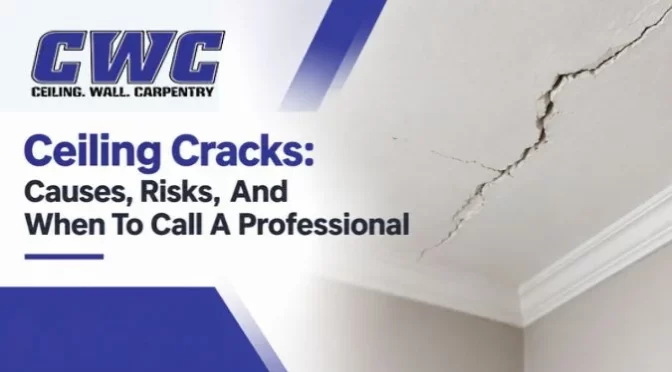
A crack across your ceiling can be easy to ignore, especially when it looks small. But not every crack has the same cause or risk. Some develop from normal settlement and material movement, while others can be linked to moisture, damaged fixings or movement within the building. Before arranging cracked ceiling repair, it helps to understand what the damage could be telling you. Ceiling Wall Carpentry (CWC) can help identify the cause and determine the appropriate repair approach.
Is Every Ceiling Crack A Problem?
No. Fine hairline cracks can occur as plasterboard joints dry, materials age or buildings experience minor movement. If a small crack remains stable and there are no other signs of damage, it may be primarily cosmetic.
The situation changes when a crack becomes wider, longer or repeatedly returns after being repaired. Cracks that extend from the ceiling onto walls or appear alongside other defects should also be assessed rather than simply covered with filler and paint.
What Is Your Ceiling Trying To Tell You?
The pattern and position of a crack can provide useful clues.
Cracks around plasterboard joints may result from movement, shrinkage or jointing issues. Cracks around ceiling edges can sometimes be associated with movement between different materials. Meanwhile, staining, bubbling or discolouration can indicate moisture entering from above.
A ceiling that appears uneven, bowed or swollen requires greater attention. These symptoms may indicate that moisture has affected the ceiling material or that supporting components have been compromised.
The Warning Signs You Should Not Ignore
Certain symptoms should prompt homeowners to arrange an inspection. Watch for:
- Cracks that continue to grow
- Cracks that repeatedly reopen
- Multiple cracks appearing in the same area
- Water stains or damp patches
- Sagging, bowing or swelling
- Gaps between the ceiling and wall
- Loose or separating cornices
- Cracks accompanied by movement elsewhere in the property
These signs do not automatically mean there is a structural problem. However, they indicate that the cause should be investigated before cosmetic repairs are attempted.
What Happens If You Leave It Untreated?
A minor surface crack may remain unchanged for years, but ignoring a recurring or moisture-related defect can allow the underlying problem to worsen.
For homeowners researching cracked ceiling repair Perth, it is important to look beyond the visible line. Persistent cracking may require joint repairs, replacement of damaged plasterboard or correction of an underlying moisture or movement issue.
Repairing only the surface without addressing the cause can result in the crack returning, meaning you pay to fix the same problem more than once.
Can A Cracked Ceiling Be Repaired?
In many cases, yes. The repair method depends on the material, extent of damage and underlying cause.
Minor cracks may require filling, sanding, joint treatment and repainting. Damaged plasterboard may need to be cut out and replaced. Where movement or moisture is responsible, that issue needs to be addressed before finishing work is completed.
A professional assessment can help distinguish between a straightforward cosmetic repair and a problem requiring more extensive work.
When Does A Ceiling Need More Than A Patch?
A visibly sagging ceiling should not simply be patched or painted. Sagging can occur when plasterboard has absorbed moisture, fixings have failed or supporting elements have moved or deteriorated.
For homeowners searching for sagging ceiling repair Perth, prompt professional assessment is particularly important. Avoid pushing, drilling or otherwise disturbing a significantly sagging area until it has been assessed.
What About Damaged Cornices?
Cracked or separating cornices can be caused by building movement, ageing materials, moisture or deteriorating adhesive. Small surface imperfections may be repairable, while loose or damaged sections may need to be secured or replaced.
If you are considering cornice ceiling repair Perth, the surrounding ceiling and wall junction should also be checked. Repairing the visible gap without understanding why it developed may lead to another failure.
Why Do Some Ceiling Cracks Keep Coming Back?
Recurring cracks usually deserve more attention than a one-off cosmetic defect. They may indicate continuing movement, inadequate joint treatment, moisture or another underlying issue.
If you need ceiling repair Hillarys, identifying the reason for recurring damage can help prevent repeated patching and repainting. A durable repair should address the source of the problem wherever possible.
Common Mistakes To Avoid
Painting directly over a crack can conceal it temporarily but does not repair the underlying defect. Repeatedly filling the same crack without investigating its cause can also waste time and money.
Another common mistake is assuming every ceiling crack is structural. Many are minor, which is why professional assessment is preferable to either ignoring the issue or assuming the worst.
When Should You Call A Professional?
Professional help is recommended when cracks are widening, recurring or accompanied by water damage, sagging, separation or other signs of movement. Early assessment can help determine the appropriate repair before damage becomes more extensive.
Final Words
Ceiling cracks are not automatically a sign of serious damage, but they should be assessed according to their appearance, progression and surrounding symptoms. Addressing moisture, movement and damaged materials early can help protect the ceiling and reduce future repair costs. For reliable cracked ceiling repair, Ceiling Wall Carpentry (CWC) can help identify the problem and recommend a practical solution.
Ready To Fix That Ceiling Crack?
For professional ceiling repair, contact Ceiling Wall Carpentry (CWC) on 0404541531 or email cwcbuild@gmail.com. Our team can discuss your ceiling concerns, explain suitable repair options and help restore your ceiling with a practical, lasting solution.
Your Ceiling Crack Questions Answered
What Causes Cracks In A Ceiling?
Ceiling cracks can result from normal building movement, plasterboard shrinkage, ageing materials, moisture, failed fixings or movement within the structure. The crack’s size, location and progression can help determine whether it is cosmetic or needs professional attention.
Are Ceiling Cracks A Sign Of Structural Problems?
Not necessarily. Many ceiling cracks are minor and cosmetic. However, widening or recurring cracks, ceiling-to-wall separation, sagging, water damage or multiple cracks appearing together should be professionally assessed to identify the underlying cause.
Can You Repair A Cracked Ceiling?
Yes. Depending on the damage, ceiling repair may involve filling and finishing cracks, repairing plasterboard joints, replacing damaged sections or securing loose materials. The underlying cause should also be addressed to help prevent the crack from returning.
How Do I Know If My Ceiling Needs Urgent Repair?
Seek professional assistance if your ceiling is visibly sagging, bowing, swollen or separating, particularly if there are signs of water damage. Rapidly worsening cracks or sections that appear loose should not be disturbed until they have been assessed.
Why Does My Ceiling Crack Keep Coming Back?
Recurring cracks can indicate ongoing building movement, moisture, joint failure, inadequate previous repairs or movement between different materials. Repeatedly filling the same crack may only provide a temporary solution if the underlying cause remains unresolved.
Can Water Damage Cause Ceiling Cracks?
Yes. Leaking roofs, plumbing faults and moisture entering from above can weaken ceiling materials and cause cracking, staining, bubbling or sagging. The source of the moisture should be repaired before damaged ceiling materials are restored.
How Long Does Ceiling Repair Take?
The timeframe depends on the size and type of damage, the materials involved and whether an underlying issue needs to be addressed. Minor cosmetic repairs may be relatively straightforward, while extensive or moisture-affected damage can require additional work.
Do You Repair Damaged Or Loose Cornices?
Yes. Cracked, loose or separating cornices can often be repaired or replaced depending on their condition. Proper preparation and secure fixing are important for achieving a neat finish and reducing the likelihood of the problem returning.

