

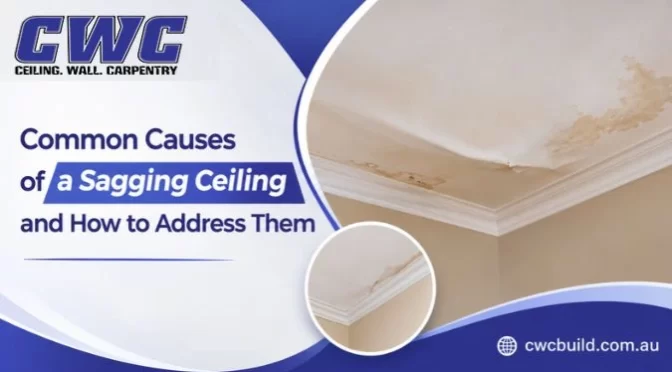
A sagging ceiling can raise questions about your home’s condition and what might be happening behind the surface. Is it a minor issue or a sign of something more serious? Understanding the possible causes is the first step towards protecting your property. In this guide, we explore 6 Common Causes of a Sagging Ceiling to help homeowners recognise potential problems and understand when professional attention may be needed. Ceiling Wall Carpentry (CWC), an experienced building and carpentry contractor, can help you navigate the process, identify concerns and determine the appropriate next steps with confidence.
1. Water Damage from Roof or Plumbing Leaks
Water damage from roof leaks, faulty pipes or overflowing bathrooms can weaken ceiling materials, causing stains, peeling paint and bulges. For ceiling repair in Perth, fix the moisture source first. Severely damaged plasterboard or plaster may require professional replacement.
2. Loose Ceiling Fixings
Ceiling plasterboard fixings and adhesives can weaken through ageing, poor installation or structural movement. Signs include sagging between supports, exposed screw heads and joint cracks. Arrange professional inspection to assess the framework and determine whether refixing or restrapping is suitable.
3. Inadequate Structural Support
Ceiling joists, battens and supports must suit the ceiling system and its loads. Damaged framing or excessive weight can cause sagging. Ceiling Wall Carpentry (CWC) recommends professional inspection, with structural engineer assessment if severe cracks, building movement or uneven floors accompany the issue.
4. Ageing or Deteriorating Materials
Older ceilings may sag as plaster, plasterboard, adhesives and supports deteriorate. Damaged straps or weakened fixings can cause separation. Professional inspection determines suitable repairs. Before drilling or disturbing older ceiling materials, assess potential asbestos risks to ensure safe handling.
5. Excess Weight Above the Ceiling
Wet insulation, unsuitable storage or incorrectly installed materials can overload ceiling components, causing sagging. Arrange a professional inspection to identify and safely remove excess loads. Avoid entering unsafe roof spaces or attempting to push a sagging ceiling back into position yourself.
6. Temperature Changes and Building Movement
Temperature and humidity changes can affect ceiling materials, while structural movement may cause cracks and uneven surfaces. Not every crack signals serious damage. For sagging ceiling repair in Perth, seek professional advice if sagging worsens, cracks spread or building movement becomes noticeable.
Final Takeaway
A sagging ceiling should never be ignored, as it may indicate hidden damage or structural concerns. Identifying the cause early helps prevent further deterioration and costly repairs. Ceiling Wall Carpentry (CWC) can assess your ceiling, recommend suitable solutions and help protect your Perth property.
Quality Craftsmanship Delivered
For reliable building and carpentry services, contact us on 0404541531 or email us at cwcbuild@gmail.com for expert assistance.
People Also Ask
What Causes A Ceiling To Sag?
A ceiling can sag due to water damage, loose fixings, deteriorating materials, inadequate structural support or excess weight from insulation and stored items. Identifying the underlying cause early helps prevent further damage and determine the right repair solution.
When Should I Arrange Sagging Ceiling Repairs In Perth?
Arrange an inspection as soon as you notice visible sagging, bulging, spreading cracks or water stains. Professional sagging ceiling repair in Perth services can identify the cause and recommend suitable repairs before the damage gets worse.
Can A Leaking Roof Cause A Sagging Ceiling?
Yes, a leaking roof can allow moisture to seep into ceiling materials, weakening plasterboard, plaster and fixings. Repairing the leak and assessing the affected ceiling are essential to prevent recurring damage and further deterioration.
Is A Sagging Ceiling Dangerous?
A sagging ceiling can pose a safety risk, especially if the materials are waterlogged, the fixings have failed or the ceiling is separating from its supports. Avoid standing beneath severely sagging areas and seek urgent professional help if the ceiling appears likely to collapse.
Can A Sagging Ceiling Be Repaired Without Replacing It?
Yes, minor damage may be repaired by securing loose fixings, repairing joints or addressing localised deterioration. However, ceilings with extensive water damage, significant separation or weakened materials may require partial or complete replacement after a professional inspection.
How Do I Choose A Reliable Ceiling Repair Professional?
Look for relevant experience, appropriate licensing where required, suitable insurance and a clear explanation of the proposed work. A reliable ceiling repair contractor should investigate the underlying cause of the damage rather than simply cover up the visible signs.
Does Ceiling Sagging Always Mean Structural Damage?
No, ceiling sagging can result from loose plasterboard fixings, failing adhesives or moisture damage rather than major structural problems. However, significant sagging accompanied by spreading cracks or other signs of building movement should be professionally assessed.
Can Wet Insulation Make A Ceiling Sag?
Yes, wet insulation can become heavier and put additional strain on ceiling supports and fixings. The source of moisture should be identified, and the affected insulation and ceiling materials should be checked to determine whether removal or replacement is needed.
How Can I Tell If My Ceiling Needs Professional Repairs?
Look for visible dips, bulges, peeling paint, water stains, exposed fixings, widening cracks or gaps between the ceiling and walls. If these signs appear or worsen over time, arrange a professional inspection to identify the cause and suitable repairs.
Can Ceiling And Wall Damage Be Repaired Together?
Yes, ceiling and wall damage can often be addressed during the same project, particularly when moisture, structural movement or deteriorating materials affect adjoining surfaces. Professional wall and ceiling repairs in Perth services can assess both areas and recommend a practical repair plan.
Should I Repair A Sagging Ceiling Myself?
Minor cosmetic repairs may be manageable for experienced DIY enthusiasts, but sagging can indicate hidden damage or failing supports. Avoid pushing the ceiling back into position or disturbing unstable materials. When the cause is unclear, professional assessment is the safer option.
Can Humidity Cause Ceiling Problems?
Yes, prolonged exposure to humidity can contribute to moisture-related deterioration, particularly when ventilation is poor or condensation builds up. Although humidity does not always cause sagging, addressing moisture problems can help protect ceiling materials and fixings.
How Long Does Ceiling Repair Usually Take?
The timeframe depends on the extent of the damage, the materials involved and whether the underlying cause needs additional work. Minor repairs may take a few hours, while extensive replacement, drying and repainting can take several days or longer.
Do Ceiling Repairs Include Repainting?
Ceiling repairs may include patching, plastering, sanding and repainting, depending on the agreed scope of work. Before proceeding, confirm whether painting and finishing are included in the quote so you know what to expect and can achieve a consistent appearance.
When Should I Seek Professional Cracked Ceiling Repair?
Seek professional cracked ceiling repair if cracks widen, repeatedly return, appear alongside sagging or coincide with doors sticking and other signs of building movement. A professional inspection can help determine whether the cracks are cosmetic or require more extensive investigation.

